
China's AI-Powered Automated PortsThe Future of Global Logistics
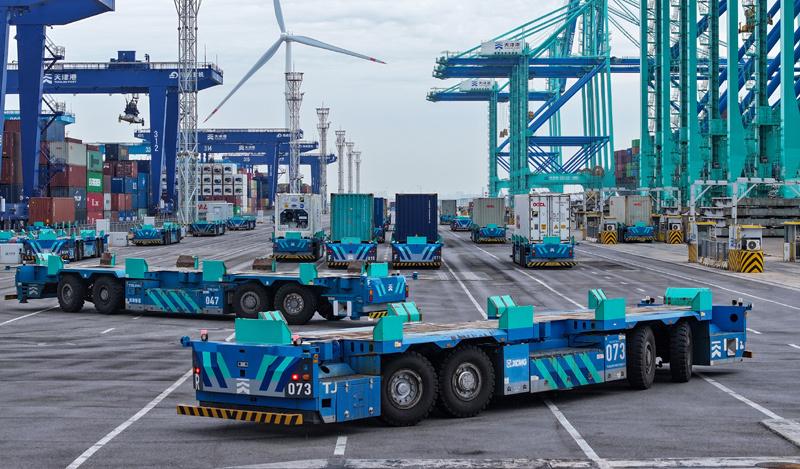
Imagine a port where towering cranes lift, stack, and load thousands of containers with zero human operators on the ground. Autonomous electric trucks move cargo around the clock while AI systems predict vessel arrivals, optimize berth allocation, and reroute shipments in real time. This is not science fiction—it is China's port infrastructure in 2026.
China has quietly built the world's most advanced network of AI-powered automated ports. Through billions of dollars in investment, the country has transformed major trade gateways into intelligent logistics ecosystems. The implications for global commerce, supply chain strategy, and emerging-market exporters are profound.
The Scale: China's Automated Port Network at a Glance
China now operates more fully automated container terminals than any other country. Supported by government initiatives and state-backed port operators, these facilities are setting new benchmarks for efficiency and throughput.
Qingdao Port (Shandong)
Home to the world's first fully unmanned automated container terminal. Operations are powered by AI-guided cranes, automated guided vehicles (AGVs), and smart stacking systems with virtually no dock workers required.
Tianjin Port
Features a 5G-enabled smart terminal integrating AI vessel scheduling, predictive maintenance, and automated customs processing into a unified digital ecosystem.
Shanghai Yangshan Port
The world's largest automated deep-water container port, handling more than 20 million TEUs annually through AI-powered logistics and cloud-based management systems.
Guangzhou Nansha Port
Operates fully electric AGV fleets, AI-driven traffic management, and digital twin technology for real-time operational simulation and optimization.
The Technology Stack Powering China's Smart Ports
1. Artificial Intelligence & Machine Learning
AI systems analyze vessel traffic, weather patterns, cargo distribution, and customs data simultaneously to optimize berth allocation and throughput. Machine learning models continuously improve operational forecasts and reduce vessel waiting times.
2. 5G Connectivity
Dedicated private 5G networks enable ultra-low latency communication between cranes, AGVs, vessels, and control centers, allowing real-time coordination across the terminal.
3. Autonomous Guided Vehicles (AGVs)
Hundreds of electric AGVs transport containers without human drivers, operating on AI-generated routes and automatically recharging during low-demand periods.
4. Digital Twin Technology
Virtual replicas of physical ports run parallel simulations to identify bottlenecks, optimize scheduling, and model disruptions before they impact real-world operations.
5. Blockchain Documentation
Trade documents, customs declarations, and cargo manifests are processed through blockchain-enabled systems, dramatically reducing paperwork and clearance times.
6. Predictive Maintenance
AI-powered monitoring systems analyze sensor data from cranes, conveyors, and vehicles to predict equipment failures before they occur, minimizing downtime.
Why China Built This: The Strategic Logic
Speed as a Competitive Weapon
Faster cargo handling lowers shipping costs and improves delivery reliability, giving Chinese exporters a significant competitive advantage in global markets.
Trade Volume Dominance
China already handles roughly one-third of global container throughput. Automation enables higher volumes with lower labor dependency and greater efficiency.
Data Sovereignty
Ownership of port infrastructure provides access to valuable trade intelligence, including cargo flows, commodity movements, and buyer-seller relationships.
Operational Resilience
Automated ports are less vulnerable to labor shortages, strikes, and large-scale disruptions, ensuring continuity during global crises.
How China Compares to the Rest of the World
| Feature | China | USA | Europe | India |
|---|---|---|---|---|
| Fully Automated Terminals | 7+ Operational | 2 (Partial) | 4–5 | 0 |
| 5G Port Networks | Widespread | Pilot Stage | Limited | Early Planning |
| AI Berth Scheduling | Standard | Emerging | Selective | Not Yet Deployed |
| AGV Fleet Scale | 500+ | <50 | ~150 | Nil |
| Container Dwell Time | 0.5–1.5 Days | 3–5 Days | 2–3 Days | 4–7 Days |
What This Means for Indian Exporters
For Indian exporters in textiles, engineering goods, pharmaceuticals, spices, and agri-products, China's logistics advantage presents both challenges and opportunities.
- Competitive Pressure: Faster logistics reduce export costs and strengthen China's competitiveness in international markets.
- Supply Chain Opportunity: Indian businesses using transshipment routes can benefit from efficient Chinese port infrastructure.
- Benchmark for Indian Ports: Modernization initiatives at JNPT, Mundra, and Visakhapatnam increasingly look to China's smart-port model as a benchmark.
- Strategic Wake-Up Call: Logistics speed is becoming as important as pricing and product quality in global trade competitiveness.
The Road Ahead: What's Next for China's Port Technology
- ✓ AI-integrated customs clearance connected to national trade databases.
- ✓ Hydrogen-powered AGVs offering longer operating ranges and faster refueling.
- ✓ Smart logistics corridors linking ports with inland warehouses and rail hubs.
- ✓ Satellite-connected vessel management systems for predictive berth planning weeks in advance.
China's automated ports represent more than an infrastructure upgrade—they are a strategic blueprint for the future of global trade. As logistics increasingly becomes a technology-driven industry, the countries and businesses that invest in intelligent supply chain infrastructure will define the next era of commerce.
Related Articles
The Future of Logistics: How Smart Supply Chains Are Redefining Global Commerce
The Future of Logistics: How Smart Supply Chains Are Redefining Global Commerce